Missed a Habit Day? Use the Dommy Reset Loop
Most people do not quit because one day went badly.
They quit because one missed day turns into a story:
"I already broke the streak, so I may as well start again next week."
That story is the real problem.
The fastest way back is not more pressure. It is a smaller action, taken quickly, with as little drama as possible.
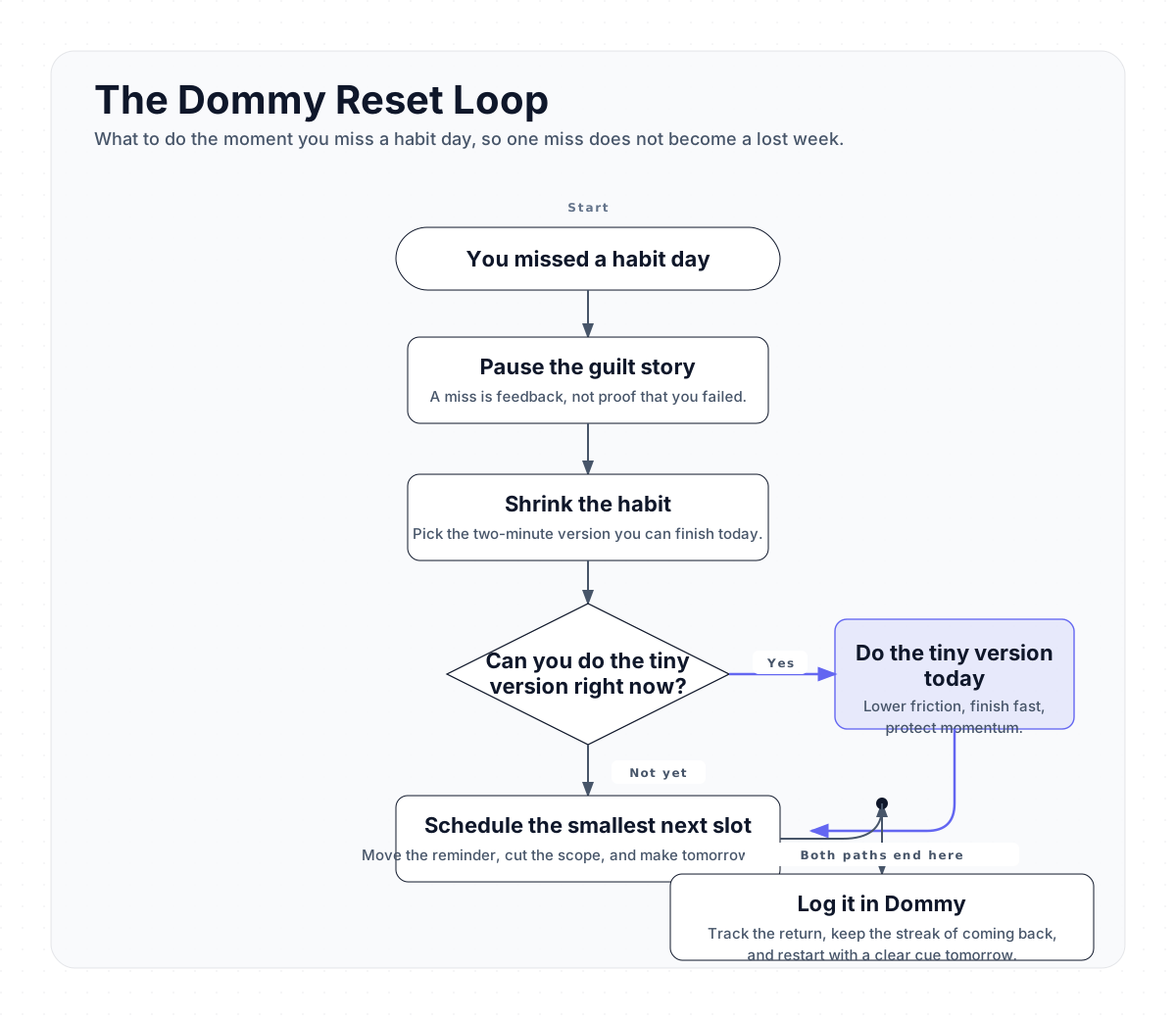
Here is the loop we recommend inside Dommy whenever you miss a habit day:
Why one miss feels bigger than it is
When you miss a habit, your brain wants to turn a tiny break into a full identity judgment.
You stop seeing the habit as a simple daily action and start treating it like evidence about who you are:
- "I am inconsistent."
- "I am back at zero."
- "I am not disciplined enough."
That is exactly when habits become fragile.
The goal after a miss is not to prove discipline. The goal is to reduce friction so the next repetition happens fast.
The reset loop, step by step
1. Pause the guilt story
Do not negotiate with yourself for twenty minutes. Do not review every reason you slipped.
Just name the situation accurately:
I missed one repetition. That is data, not failure.
This matters because shame tends to increase avoidance. A calm reset increases action.
2. Shrink the habit immediately
Your full habit might be:
- a 30-minute workout
- 20 minutes of reading
- a long journaling session
- a full morning routine
Your reset version is much smaller:
- 5 push-ups
- 2 pages
- 3 lines
- one step from the routine
The smaller version is not a compromise. It is how you preserve identity and momentum.
3. Ask one useful question
Not:
Do I feel motivated enough to do the full thing?
Instead:
Can I do the tiny version right now?
That question changes everything. It turns the moment from emotional to practical.
4. If yes, do it now
This is the highest-leverage path.
When you finish the tiny version right away, you interrupt the slide from "one miss" into "I guess I stopped."
In Dommy, that means you can log a real win today instead of waiting for a perfect restart.
5. If not, schedule the smallest next slot
Sometimes "right now" is not realistic. That is fine.
But do not leave the next repetition vague.
Move the reminder. Reduce the scope again if needed. Make the next action obvious enough that future-you does not need willpower to decode it.
Bad reset:
- "I will try again tomorrow."
Better reset:
- "At 7:40 tomorrow, I will do 2 minutes of stretching before coffee."
6. Log the return, not just the streak
One underrated habit skill is learning to come back quickly.
That is why Dommy should not only remind you of perfect runs. It should help you notice recovery speed.
When you log the tiny version, you are reinforcing a stronger identity:
I am someone who returns quickly.
That identity is more durable than "I never miss."
Real examples
| Original habit | Reset version |
|---|---|
| 30-minute run | Put on shoes and walk for 5 minutes |
| 20 pages of reading | Read 2 pages |
| Full meditation session | Sit and breathe for 60 seconds |
| Deep room reset | Put away 3 items |
| Long language lesson | Review 5 flashcards |
The reset version should feel almost too easy. That is the point.
How to use this with Dommy
If you want this loop to work in real life, set your habits up so recovery is friction-light:
- Name the smallest viable version of each habit before you need it.
- Keep your reminder time editable, not rigid.
- Write habit names that describe the action clearly.
- Log tiny completions without treating them as fake wins.
The person who returns fast will usually outperform the person who waits for the perfect Monday.
The habit that matters most
Your most important habit is not reading, training, journaling, or stretching.
It is the habit of restarting.
If you can miss a day without spiraling, you become much harder to knock off course.
That is what the Dommy Reset Loop is for: fewer guilt-heavy restarts, more quick returns, and a habit system that survives real life.
If you miss today, do not try to save the whole month.
Shrink the action, take the next step, and get back in motion.